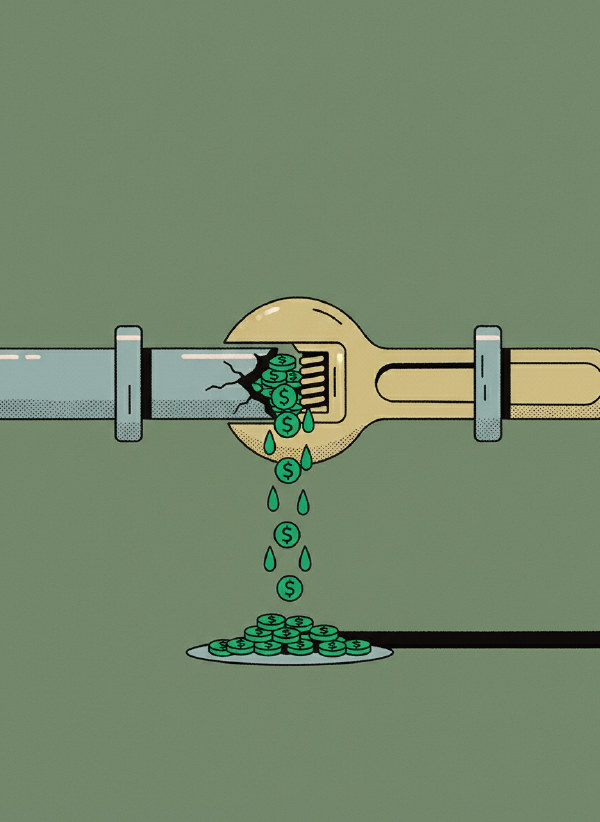
Payment processing is not just plumbing. It is a critical operational risk. Learn how fees and hold times impact your bottom line before they freeze your funds.
This guide explores essential financial strategies for startups, focusing on burn rate, cash flow management, and the discipline of regular financial audits to maintain operational health.
This article explores the critical distinctions between venture capital and market validation while providing practical strategies for bootstrapped startups to manage cash flow and prioritize movement over debate.
We explore why signing a deal isn’t enough. We analyze the dangers of accounts receivable and how to use your balance sheet to ensure your startup survives.
Growth is not the only metric of success. This article explores retrenchment as a vital strategy for saving profitability when market conditions shift or expansion becomes unsustainable.
This guide provides founders with practical steps to manage their own bookkeeping by establishing simple habits, choosing efficient tools, and maintaining financial visibility for future growth.
This article defines the Cash Conversion Cycle, breaks down its calculation, and explains how founders can manipulate inventory, receivables, and payables to improve cash flow.
Deferred revenue is money received before services are delivered. It sits as a liability on your balance sheet until earned, requiring careful cash flow management and accounting discipline.
Paying yourself zero distorts your business metrics and invites burnout. This guide helps founders calculate a sustainable salary that balances personal survival with company growth.
Net Working Capital measures a startup’s short-term financial health. Learn to calculate it, interpret the results, and manage the timing between paying bills and collecting revenue.
We move beyond accounting as compliance and treat finance as a survival dashboard, covering unit economics, cash flow, balance sheets, and the necessity of paying yourself.
Debt financing involves borrowing capital rather than selling ownership. This article explores the mechanics of debt, the trade-offs with equity, and the risks of leverage.
Zero-based budgeting is a financial strategy where every expense must be justified for each new period, starting from a base of zero rather than relying on historical spending data.
Inventory turnover measures how frequently stock is sold and replaced. It is a critical metric for understanding sales velocity and cash flow efficiency.
A sinking fund is a strategic reserve for known future expenses. This guide explains how to use one to stabilize startup cash flow and reduce financial risk.
Pricing in business is a fluid conversation, not a rigid rule. This guide explores how to negotiate software, services, and contracts to rescue capital and extend your runway.
Liquid assets are cash or items easily converted to cash. Understanding them is vital for managing runway, payroll, and avoiding the trap of being profitable but insolvent.
A zombie company survives only by borrowing to pay interest on debts. This guide explains the financial mechanics, warning signs, and how to avoid this stagnant state.
Profit is a theory, but cash is a fact. This article explains how to master the timing of inflows and outflows to survive the ‘Gap of Death’ in business.
CAC Payback Period measures the months required to recoup the cost of acquiring a customer. It is a critical metric for understanding cash flow, capital efficiency, and runway risks.